
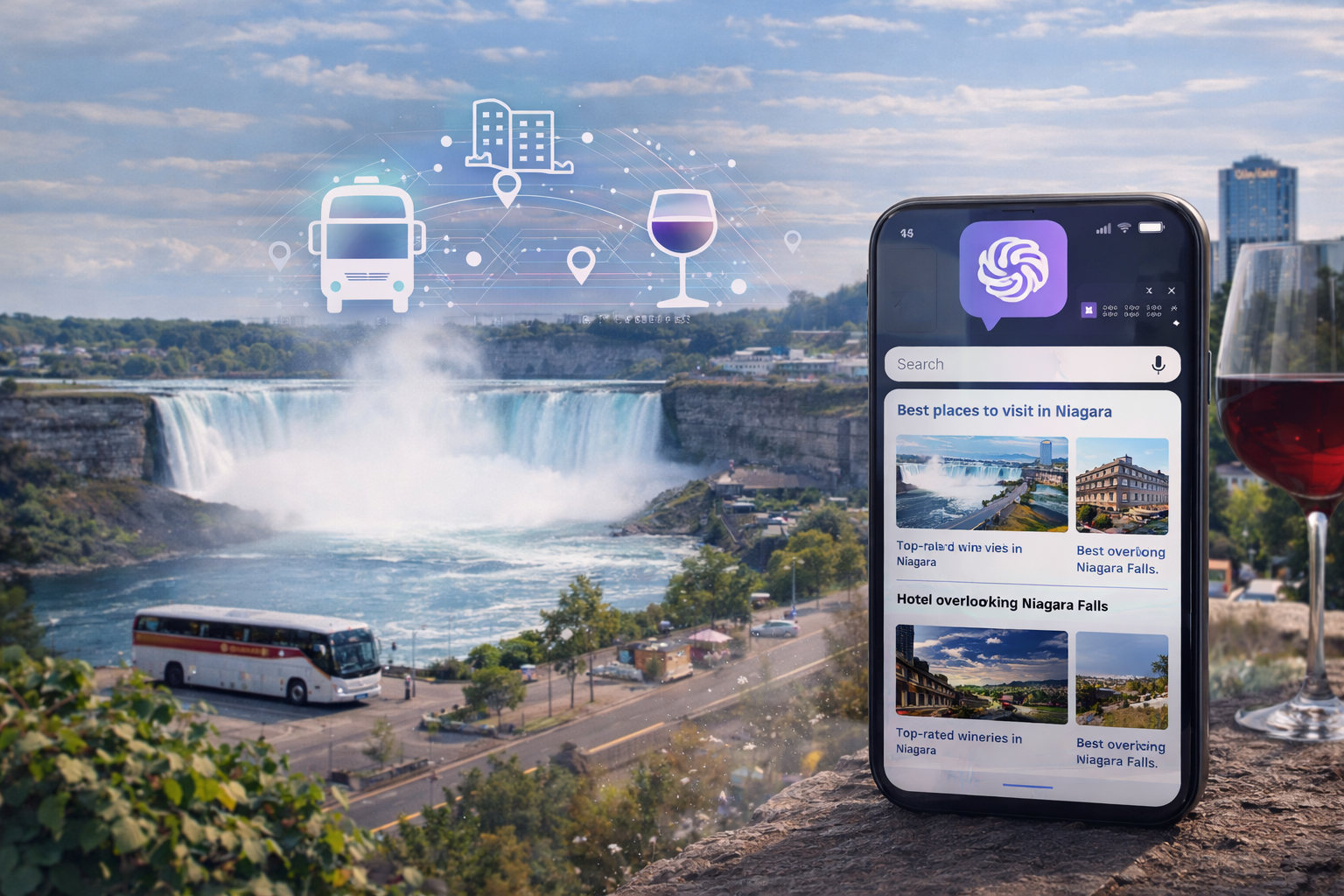
Why Tourism and Hospitality Businesses in Niagara Must Compete in AI Search
Tourism businesses in Niagara are entering a new phase where visibility depends on more than traditional marketing. As AI search continues to influence how visitors discover destinations, hospitality businesses in Niagara must adapt to stay competitive and attract modern travellers.
The Niagara region is one of Canada’s most recognizable destinations. From Niagara Falls to the vineyards of Niagara-on-the-Lake, the region attracts millions of visitors every year. Hotels, wineries, restaurants, tour operators, and experience-based businesses form the backbone of the local economy.
Yet the way tourists discover these businesses has changed dramatically.
In the past, visitors relied on travel brochures, hotel concierges, or word-of-mouth recommendations. Today, the majority of travel decisions begin online.
People planning a trip to Niagara search questions such as:
- best wineries near Niagara Falls
- places to visit in Niagara wine country
- unique experiences in Niagara region
Search engines and AI travel assistants attempt to answer these questions instantly.
Businesses that appear in those answers capture the attention of potential visitors.
The Visibility Challenge for Local Tourism Businesses
Despite the enormous visitor traffic in Niagara, many local businesses struggle to appear in search results.
This often happens because their websites do not clearly communicate:
- what experiences they offer
- where they are located
- what makes them unique
Search engines cannot recommend what they do not understand.
Tourism businesses that structure their information clearly gain a major advantage
The Rise of AI Travel Discovery
Travel planning is becoming increasingly conversational.
Visitors are asking AI platforms questions like:
“Where should I go wine tasting near Niagara Falls?”
“Which wineries offer unique experiences in Niagara?”
AI systems analyze information from multiple websites to generate recommendations.
Businesses that provide clear descriptions, structured content, and useful information are far more likely to be included in these recommendations.
How Tourism Businesses in Niagara Can Improve AI Search Visibility
For tourism businesses, a website should function as more than a booking page.
It should provide helpful information that inspires visitors and answers questions.
Examples include:
- guides to local attractions
- explanations of unique experiences
- recommendations for visitors planning their trip
When websites provide valuable insights, they become trusted resources that search engines reference.
Final Thoughts
Niagara’s tourism industry is entering a new phase where digital discovery plays a major role in visitor decision-making. Businesses that communicate their experiences clearly and provide helpful information online will stand out in both search engines and AI travel platforms. As tourism continues evolving, digital visibility will become one of the most important competitive advantages for businesses in the region.